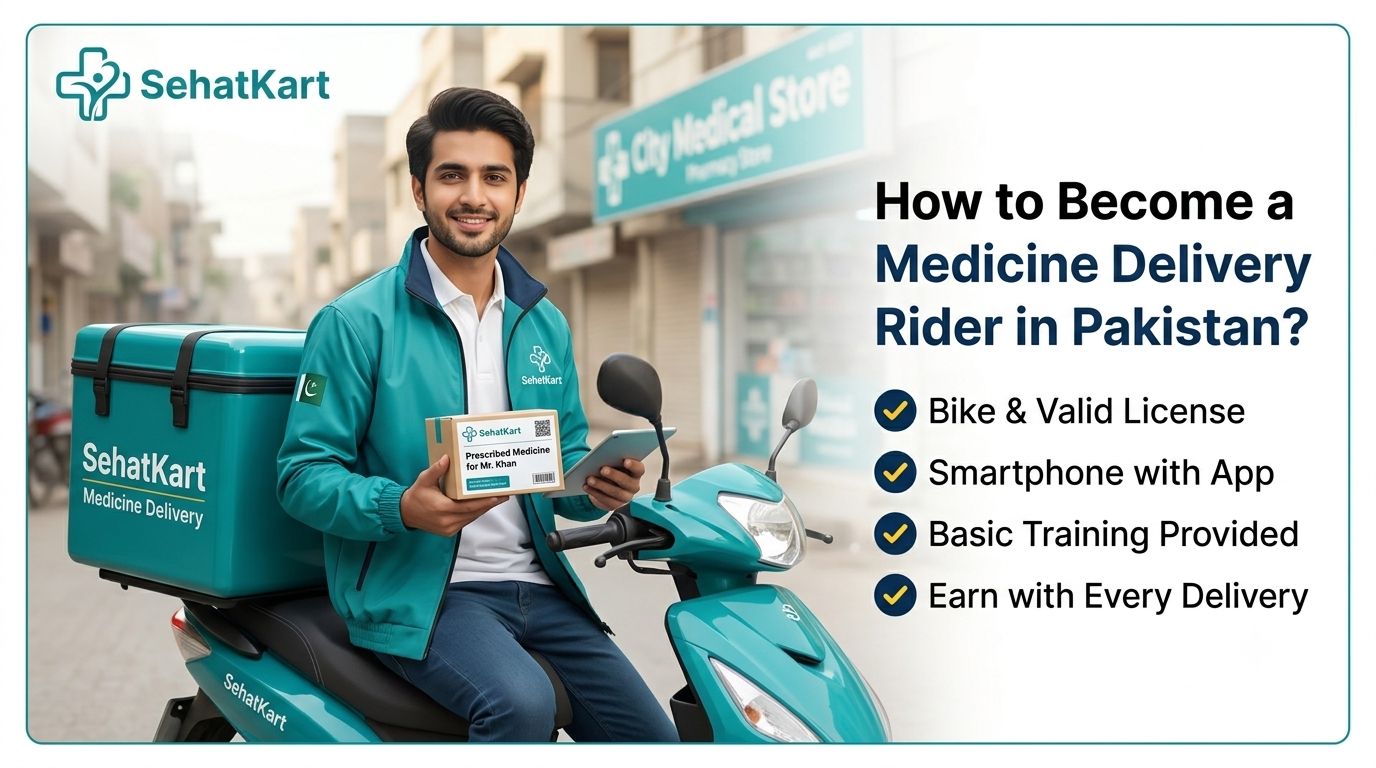
Riders on SehatKart earn Rs. 130 per delivery with flexible morning, afternoon, and evening slots in Sadiqabad. To qualify, you need a motorbike or bicycle, a valid CNIC, a smartphone with internet access, and a Sadiqabad address. The application is submitted online at sehatkart.co, there is no in-person interview requirement to apply, and no prior delivery experience is listed as a condition.
This guide covers the full eligibility requirements, what the time slots look like in practice, how the order assignment system works, and what to expect after submitting an application. SehatKart currently operates in Sadiqabad, Punjab, with active expansion underway to other cities across Pakistan. Riders who join during the platform's early growth in Sadiqabad are building tenure before the market opens up further.
What Riders Earn and When They Work?
The earning structure is straightforward: Rs. 130 per completed delivery, with no deduction from that figure for platform use. Riders are not employees, they work on a per-delivery basis, choosing which time slots to activate on any given day rather than committing to fixed shift hours.
Time Slots Available for Riders in Sadiqabad
| Slot | Hours |
|---|---|
| Morning | 8:00 AM – 12:00 PM |
| Afternoon | 12:00 PM – 5:00 PM |
| Evening | 5:00 PM – 10:00 PM |
A rider can activate one slot, two slots, or all three on any day, or none, if they are unavailable. There is no minimum number of slots required per week. Orders only come through during active hours (8 AM to 10 PM platform-wide), so slots outside those hours would not generate deliveries in any case.
Bonus tip: Activating the evening slot specifically tends to align with higher order volume, customers returning home or needing medicine after daytime hours make this a consistently active window on the platform.
Eligibility Requirements
To apply as a rider on SehatKart, the following are required:
- Motorbike or Bicycle — any registered motorbike in working condition; vehicle type is recorded during registration
- Valid CNIC — both sides of the national identity card are uploaded during the application process
- Smartphone with internet — order notifications, acceptance, and status updates all run through the platform's rider dashboard in a browser; no app download is required
- Sadiqabad address — riders must be based in Sadiqabad for the platform's current service area; as coverage expands to other cities, riders in those areas will be onboarded separately
- Active email address — order notifications and prescription order alerts are sent by email when a rider is online and available
There is no age restriction listed beyond what the CNIC requirement implies (18 years minimum to hold a Pakistani national identity card). Prior delivery experience is not stated as a requirement.
How the Order System Works for Riders?
Understanding how orders are assigned matters before applying, because it affects what a rider's actual workflow looks like day to day.
When a customer places an order, all active riders receive a notification simultaneously, not sequentially. The first rider to accept the order through the dashboard gets it. This is a race-condition-safe assignment: only one rider can accept any given order, regardless of how many riders try at the same moment. There is no penalty for not accepting an order, riders can decline or simply not respond without it affecting their standing.
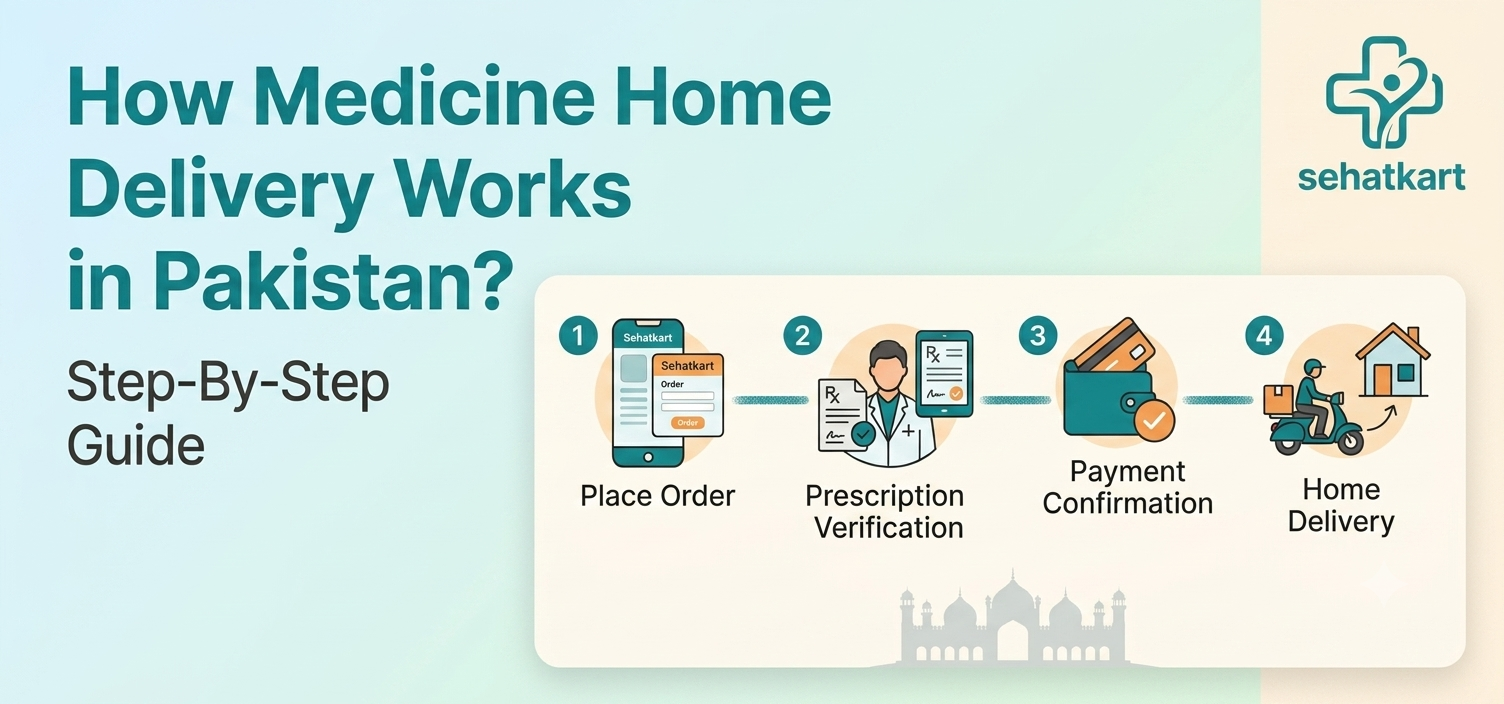
For prescription orders, the system works the same way: riders see that a prescription order is available, but the customer's details and prescription image are only shared with the rider who accepts. The rider then goes to the relevant DRAP-verified pharmacy, collects the prepared medicine, and delivers to the customer's address.
Bonus tip: Keeping the rider dashboard open and notifications enabled during an active slot means order alerts come through in real time — a delayed response by even a few seconds can mean another rider accepts first on a busy order.
What Happens After Accepting an Order
| Stage | What the Rider Does |
|---|---|
| Order accepted | Rider receives customer name, address, phone number, and order details |
| Pickup | Rider goes to the pharmacy and collects the prepared medicine |
| In transit | Rider marks the order as "in transit" in the dashboard — customer is notified |
| Delivery | Rider delivers to the customer's address and marks as "delivered" |
| Earnings | Rs. 130 is recorded against the rider's account for that delivery |
For Cash on Delivery orders, the rider collects payment from the customer at the door. The amount collected is the full order total — medicine cost plus platform and delivery fees — which is then reconciled through the platform's earnings system.
What to Consider Before Applying
A few practical things are worth thinking through before submitting an application:
- Is the motorbike registered and roadworthy? An unregistered or unreliable vehicle creates risk on deliveries, the rider is responsible for their own vehicle maintenance and fuel.
- Is the smartphone capable of running a browser consistently? The rider dashboard is browser-based, but a very old or low-memory phone may struggle with real-time notifications during busy slots.
- Is a Sadiqabad address on the CNIC or otherwise verifiable? Applications from outside the current coverage area will not be matched to orders until expansion reaches that city.
- Is the email address active and checked regularly? Prescription order notifications and general platform communications go to the registered email, an inactive email means missed opportunities.
- Is the availability genuinely flexible, or is there a fixed daily commitment expected? There is none, but understanding that earnings are directly tied to deliveries completed, not hours logged, sets realistic expectations before starting.
Common Questions
How much can a rider earn per day on SehatKart?
Earnings depend entirely on how many deliveries are completed. At Rs. 130 per delivery, a rider completing several deliveries across morning and evening slots builds earnings directly from volume, there is no base salary or guaranteed minimum.
Is prior delivery experience required to apply?
No prior delivery experience is listed as a requirement. A valid CNIC, a motorbike, and a smartphone are the practical entry requirements.
Can a rider work part-time alongside another job?
Yes, the slot system is designed specifically for this. A rider working another job during the day can activate only the evening slot; a student can activate morning slots on specific days. There is no minimum slot commitment per week.
Do riders need to visit an office to apply?
No, the application is submitted entirely online through the rider registration page at sehatkart.co. CNIC images are uploaded as part of the form, and the process does not require an in-person visit at any stage.
How long does approval take after submitting an application?
Application review involves verifying the submitted CNIC and vehicle details. The timeline is not fixed, applicants are contacted via the email provided once the review is complete. Submitting clear, complete CNIC images the first time avoids a back-and-forth that would add time.
What happens if a rider marks an order as delivered but the customer disputes it?
Order status changes are logged with timestamps in the platform system. A disputed delivery triggers a review of the order history rather than an immediate penalty. Riders should ensure delivery is confirmed with the customer in person before marking it complete in the dashboard.
Can a rider cover all areas of Sadiqabad, or are they assigned specific zones?
Riders are not restricted to specific zones within Sadiqabad, any active rider can accept any order, regardless of where in the city the pharmacy or the customer's address is located. Route planning is the rider's own responsibility.
What if a rider's phone runs out of battery or loses internet during a slot?
The rider would not receive order notifications during any offline period. Keeping the phone charged and maintaining a stable internet connection during active slots is the rider's responsibility, missed notifications cannot be retroactively credited.
Will riders in Sadiqabad be able to work in other cities when SehatKart expands?
Riders are currently onboarded for Sadiqabad coverage. As the platform expands to other cities in Pakistan, riders in those areas will be onboarded locally, a Sadiqabad-based rider would not typically cover orders in a different city.
Conclusion
Becoming a medicine delivery rider in Pakistan through SehatKart requires a motorbike, CNIC, smartphone, and a Sadiqabad address, the application is online, the slot system is flexible, and the earning model is per-delivery at Rs. 130 per completed order.
The practical considerations before applying are mostly logistical: vehicle reliability, phone capability, and a realistic sense of how per-delivery earnings translate to actual daily income based on order volume and slot selection. For anyone based in Sadiqabad with a motorbike and flexible time, the barrier to entry is low and the application process is straightforward.
Apply as a Rider Today
Submit a rider application at sehatkart.co. The form takes a few minutes and CNIC images are uploaded directly in the browser. For questions before applying, reach SehatKart's team at support@sehatkart.co or on WhatsApp at +923006707390.